
Basketball fans have long been curious about NBA Players Are Jehovah’s Witnesses, and the question keeps resurfacing every time a former star opens up about faith over fame. The NBA is one of the most diverse leagues in the world, drawing athletes from dozens of countries, cultures, and belief systems.
Among this mix, a small but notable group of former players has publicly identified as Jehovah’s Witnesses, a Christian denomination known for its door-to-door ministry, its non-trinitarian theology, and its members’ willingness to place spiritual conviction above worldly success. Full List of Confirmed Ex-NBA Players Who Are Jehovah’s Witnesses (2026)
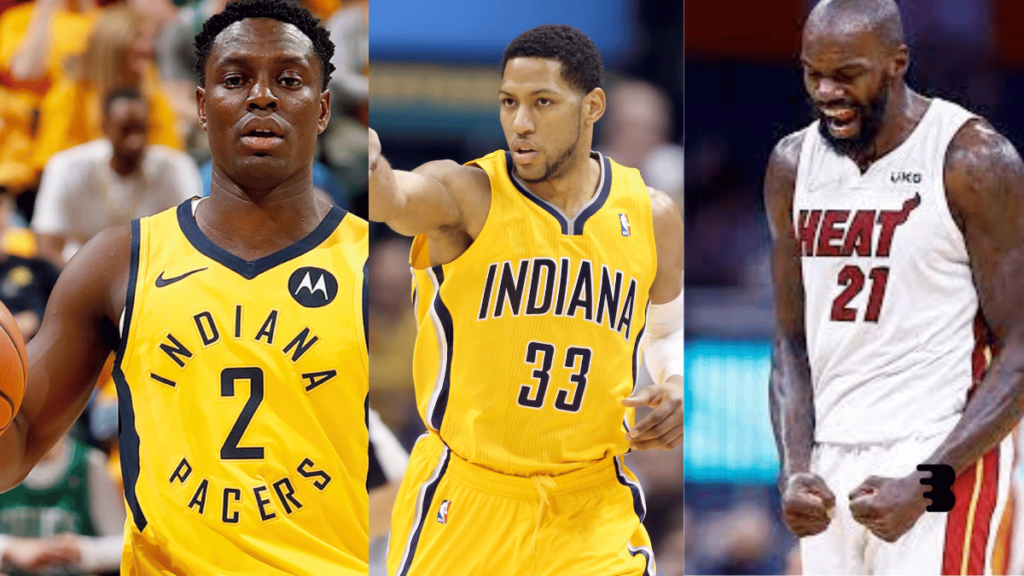
As of 2026, sports outlets and biographical records consistently confirm three modern ex-NBA players as practicing Jehovah’s Witnesses: Darren Collison, Danny Granger, and Dewayne Dedmon. Older generations of the league also included well-known Witnesses such as A.C. Green, Michael Adams, and Dave Meyers, though these players belonged to an earlier basketball era.
The jehovah’s witnesses list tied to modern NBA rosters is short by design, since the faith itself represents a small percentage of the global population and an even smaller slice of elite athletes. Below is a simplified table summarizing the most frequently cited names, their primary teams, and their connection to the faith.
| Player | Primary NBA Teams | Connection to Faith |
| Darren Collison | Hornets, Pacers, Mavericks, Clippers, Kings | Retired in 2019 to focus on ministry |
| Danny Granger | Pacers, Clippers, Heat | Raised in the faith, baptized in 2017 |
| Dewayne Dedmon | Warriors, Magic, Hawks, Kings, Heat | Raised by a Witness mother, overcame family resistance |
| A.C. Green | Lakers, Suns, Mavericks, Heat | Longtime Witness, known for celibacy pledge |
| Michael Adams | Kings, Clippers, Nuggets, Bullets | Practicing Witness during playing career |
This table is a helpful starting point, but the real story is in how each of these men balanced elite competition with a faith that discourages celebration of personal glory, national holidays, and even blood transfusions during medical emergencies.
Ex-NBA Stars Who Chose Faith: The Jehovah’s Witnesses List Revealed
What makes this group of former players so compelling is not simply that they identify with a religious minority, but that several of them made career-altering decisions because of it. Unlike athletes who quietly practice a faith in private, some of these men used their platform to speak candidly about how their beliefs shaped major life choices. Darren Collison walked away from a potential eight-figure contract.
Danny Granger waited until retirement to complete his baptism. Dewayne Dedmon defied his mother’s early objections just to play the sport professionally. Each story reflects a different relationship between Jehovah’s Witnesses teachings and the pressures of a 82-game NBA season, which often collides with the denomination’s emphasis on ministry work, modesty, and family time.
Sports commentators have noted that this kind of public transparency about faith is rare in a league culture that often centers on branding, sneaker deals, and highlight reels rather than spiritual reflection. The willingness of these players to discuss their beliefs openly has, in a sense, created its own small subculture within basketball media, one that keeps generating search interest years after these athletes left the court.
How Many Former NBA Players Became Jehovah’s Witnesses? The Real Count
The honest answer is that nobody can offer a perfectly exact number, because religious affiliation is a private matter that the NBA does not track or publish. However, cross-referencing sports journalism, biographical databases, and player interviews narrows the confirmed, name-attached list to a handful of individuals across NBA history.
Counting only players with direct, on-record confirmation, the number of modern ex-nba players who are Jehovah’s Witnesses sits at roughly three to six, depending on how far back the count reaches. If older retired players such as A.C. Green, Dave Meyers, Reggie Theus, Detlef Schrempf, and Greg Ostertag are included, some estimates push closer to ten.
It is worth noting that some of those names are associated with the faith through family upbringing or reported affiliation rather than a fully documented public statement, so the confirmed core group remains small. This scarcity is part of what makes the topic so searchable: fans want a definitive number, but the truth is a layered answer built from years of scattered reporting rather than one official source.
The Quiet Faithful: Ex-NBA Players Embracing Jehovah’s Witnesses Beliefs
Not every athlete connected to this faith made a dramatic public exit from the league. Many simply lived their beliefs quietly, avoiding interviews about religion altogether and letting their conduct speak for itself. Teammates and coaches have occasionally mentioned in passing that a player kept to strict personal codes, avoided certain team celebrations tied to birthdays or holidays, or spent off-days doing community outreach instead of the usual promotional appearances.
This lower-profile devotion is consistent with core Jehovah’s Witnesses practice, which discourages public displays meant to draw personal attention and instead emphasizes humility, service, and door-to-door ministry. For every Collison-style retirement announcement, there are likely several nba players that are jehovah’s witnesses who never made it a headline story, which is exactly why compiling a truly complete list is so difficult for sports researchers and journalists.
From Courtside to Kingdom Hall – Ex-NBA Players’ Faith Journeys
The phrase “Kingdom Hall” refers to the local place of worship used by Jehovah’s Witnesses instead of a traditional church, and for these former players, the transition from arena lights to Kingdom Hall pews represents a genuine lifestyle shift. Professional basketball demands travel schedules, media obligations, and training regimens that leave little room for consistent religious study or door-to-door ministry, both central pillars of the faith.
That tension explains why some players waited until retirement to formalize their commitment through baptism, while others managed to balance both worlds simultaneously throughout their careers. The contrast between a packed NBA arena and a modest, quiet Kingdom Hall service captures just how dramatic this personal transformation can feel.
It also explains the ongoing public fascination: seeing a millionaire athlete step away from fame toward a life built around scripture study and volunteer ministry offers a rare, humanizing storyline in a sports culture usually obsessed with statistics and championships.
Confirmed List: Ex-NBA Players Who Are Jehovah’s Witnesses in 2026
Bringing the discussion back to hard facts, here is the confirmed and most frequently cited jehovah’s witnesses list as reported by sports media through 2026. These are the names readers should trust when searching for accuracy rather than speculation.
Darren Collison remains the most cited name due to his 2019 retirement announcement, which directly credited his faith.
Danny Granger follows closely, known for being raised in the religion and completing his baptism after his NBA career ended. Dewayne Dedmon rounds out the modern trio, notable for the way his mother’s devout practice initially blocked his path to basketball entirely.
Older-generation names occasionally mentioned alongside them include A.C. Green, Michael Adams, and Dave Meyers, all of whom played in earlier decades and have separately confirmed ties to the faith. This confirmed grouping remains the backbone of nearly every credible article addressing how many ex-NBA players are Jehovah’s Witnesses.
Why This List Stays Short
The list stays short primarily because Jehovah’s Witnesses represent a small global religious population, and because professional basketball’s demanding travel and training schedule conflicts with core ministry obligations that most devout members prioritize weekly.
Darren Collison’s Bold Retirement: Prioritizing Jehovah’s Witness Faith
Darren Collison’s story is the single most searched example connected to this topic, and for good reason. After ten NBA seasons split between the New Orleans Hornets, Indiana Pacers, Dallas Mavericks, Los Angeles Clippers, and Sacramento Kings, Collison announced in June 2019 that he was walking away from the league at just 31 years old.
He was coming off a solid season averaging around 11 points and six assists per game, and multiple teams were reportedly ready to offer him a contract worth roughly ten million dollars for a single season. Instead, Collison published an open letter explaining that his faith mattered more than another contract. He described feeling that ministry work and family time brought him a sense of joy that basketball, despite a lifetime of loving the sport, could no longer match.
He briefly returned to the NBA in December 2021 on a short ten-day contract with the Los Angeles Lakers before once again stepping away. His decision remains one of the most cited examples of an athlete prioritizing religious conviction over financial opportunity, and it single-handedly sparked much of the ongoing public interest in nba players that are jehovah’s witnesses.
Danny Granger’s Path: Raised in the Faith and Baptized Post-NBA
Danny Granger’s connection to Jehovah’s Witnesses traces back to his upbringing rather than a sudden mid-career conversion. Drafted 17th overall by the Indiana Pacers in 2005, Granger became an All-Star and the league’s Most Improved Player in 2009 after averaging nearly 26 points per game. Injuries slowed his final seasons with the Philadelphia 76ers, Los Angeles Clippers, and Miami Heat before he officially retired in 2015.
Granger had grown up in a household connected to the faith, but he did not complete his formal baptism until 2017, two years after leaving professional basketball. In past interviews, Granger described a sense of calm that came with his beliefs, one he felt carried directly onto the basketball court during high-pressure moments.
His willingness to discuss faith candidly, paired with his standout NBA resume, cements him as one of the clearest examples in any jehovah’s witnesses list tied to professional basketball.
Dewayne Dedmon’s Story: Overcoming Family Opposition to Play Pro Ball
Dewayne Dedmon’s basketball journey stands apart from Collison’s and Granger’s because his connection to the faith almost prevented his NBA career from happening at all. Raised by a devout Jehovah’s Witness mother, Dedmon was discouraged from playing organized sports throughout much of his youth, since athletic competition and personal glorification can conflict with certain interpretations of the faith’s teachings.
It was not until he turned 18 that Dedmon pushed back against his mother’s wishes and pursued basketball seriously, eventually earning a spot at USC before entering the NBA in 2013. He went on to play for several franchises, including the Golden State Warriors, Orlando Magic, Atlanta Hawks, Sacramento Kings, and Miami Heat, developing a reputation as a reliable seven-foot center known for rebounding and rim protection.
Dedmon has spoken about how his faith ultimately helped him manage adversity throughout his career, describing it as a steady source of composure. His story offers a compelling counterpoint to the other names on this list, since it shows faith shaping the beginning of a career rather than its ending.
Why So Few? Facts Behind Ex-NBA Players and Jehovah’s Witnesses
There are several practical reasons the list of confirmed nba players that are jehovah’s witnesses stays so limited. First, Jehovah’s Witnesses make up a small fraction of the global population, generally estimated in the low single-digit millions worldwide, which naturally limits representation across any elite profession.
Second, the denomination places heavy emphasis on regular ministry attendance, door-to-door outreach, and modest personal conduct, all of which can be difficult to maintain alongside an NBA travel schedule that often includes over 80 games plus practices, media days, and preseason obligations. Third, Jehovah’s Witnesses generally avoid activities tied to personal glorification, patriotic displays, and certain celebrations, creating friction with a league culture built heavily around individual branding, national anthems, and holiday-based promotional games.
Finally, many practicing members simply choose not to publicize their faith, meaning the true number could realistically be higher than what sports media has documented. These combined factors explain why, despite the NBA’s massive size and global reach, only a small, well-documented group of players has become publicly associated with this particular faith.
Jehovah’s Witnesses in the NBA: The Short but Inspiring Ex-Player Roster
Even though the roster is short, it is packed with genuinely inspiring storylines. A three-time All-Star candidate walking away from guaranteed millions, a scoring champion who waited years to formalize his baptism, and a seven-footer who had to fight his own family to chase a basketball dream all show different sides of the same underlying theme: conviction outweighing convenience.
Sports fans are often drawn to stories where athletes make choices that seem to run counter to typical career incentives, and this small group of Jehovah’s Witnesses delivers exactly that kind of narrative. As one sports outlet summarized the sentiment surrounding Collison’s decision, it framed his choice as a surprising departure from money on the table for religious conviction. That framing captures why this topic continues generating search traffic years after most of these players left the court.
Ex-NBA Players’ Spiritual Shift: Collison, Granger, Dedmon Spotlight
Placing these three modern names side by side reveals a shared thread despite their different circumstances. All three grew into adulthood shaped by the same core denomination, all three balanced demanding NBA careers against ministry-focused values, and all three eventually became public examples cited whenever this topic resurfaces online.
Collison represents faith prioritized at the peak of earning potential. Granger represents faith fulfilled after the final buzzer sounded on his career. Dedmon represents faith overcome as an obstacle on the way into the league rather than out of it. Together, their combined stories form the modern backbone of nearly every article addressing nba players that are jehovah’s witnesses, and their willingness to discuss their beliefs publicly has made them reference points for broader conversations about faith and professional sports.
Retired for Faith: Darren Collison’s Decision to Leave the League
It is worth revisiting the financial scale of Collison’s decision, since it remains one of the most striking parts of his story. Over his ten-year career, Collison earned an estimated forty-plus million dollars in NBA salary, and reports indicated he could have nearly doubled his final contract value had he continued playing.
Choosing retirement at 31, an age when many point guards are entering their prime years of experience and leadership, only amplified how significant his faith-driven decision truly was. Collison specifically cited a desire to spend more time in ministry work and helping less fortunate community members, a value system central to Jehovah’s Witnesses practice.
His decision has since become something of a cultural touchstone, frequently referenced whenever discussions turn to athletes who choose personal conviction over continued professional success.
Danny Granger Baptized: From Pacers Star to Devout Jehovah’s Witness
Granger’s baptism in 2017 served as a formal, public confirmation of beliefs he had held privately since childhood. Baptism within the Jehovah’s Witnesses faith is considered a serious, deliberate commitment rather than a symbolic ritual, often requiring years of personal study and reflection before a member feels ready.
For Granger, completing this step after retirement allowed him the freedom to fully commit to ministry responsibilities without the competing demands of an NBA schedule. Since retiring, Granger has stayed connected to basketball as a media analyst while also building a real estate investment business and supporting diabetes awareness initiatives tied to his family’s health history. His post-career path illustrates how these players often blend faith, business, and continued basketball involvement rather than disappearing entirely from public life.
Dewayne Dedmon Defied Odds: Mom’s Faith vs. NBA Dreams
Dedmon’s path deserves extra attention because it flips the usual narrative. Instead of faith prompting an athlete to step away from basketball, his mother’s devotion to Jehovah’s Witnesses nearly kept him from ever starting. Team sports, especially those involving intense competition and personal recognition, can raise concerns for some practicing families due to teachings around modesty and avoiding excessive personal glorification.
Dedmon respected his mother’s wishes throughout his early teenage years before eventually asserting his own independence at 18, a turning point that ultimately led him to a nine-plus season NBA career. His journey demonstrates that the relationship between this faith and professional basketball is not one-directional; it can just as easily shape the beginning of a career as it can influence its ending.
2026 Update: The Confirmed Ex-NBA Jehovah’s Witnesses and Their Legacies
As of 2026, Collison, Granger, and Dedmon remain the most consistently confirmed names tied to this topic, with no major new public confirmations from currently retiring players. Their legacies now extend beyond basketball statistics, serving as reference points in discussions about faith, sacrifice, and the pressures of professional sports culture.
Collison’s early retirement continues to be cited in sports journalism whenever athletes make similarly unexpected career decisions. Granger’s post-retirement baptism is frequently referenced in stories exploring how athletes reconcile personal belief systems with public careers.
Dedmon’s story remains a compelling example of perseverance against family-based religious resistance. Together, these three names form the clearest, most cited answer to the recurring question of how many ex-NBA players are Jehovah’s Witnesses, and their combined stories continue to resonate with readers interested in the intersection of professional sports and personal faith.
FAQs About Ex-NBA Players Who Are Jehovah’s Witnesses (March 2026)
How many ex-NBA players are confirmed Jehovah’s Witnesses? The most consistently confirmed modern names are Darren Collison, Danny Granger, and Dewayne Dedmon, with older-generation players like A.C. Green, Michael Adams, and Dave Meyers also historically associated with the faith.
Why did Darren Collison retire early from the NBA? Collison retired in 2019 at age 31, citing his Jehovah’s Witnesses faith and a desire to focus on ministry and family over a potential multimillion-dollar contract.
When was Danny Granger baptized? Granger completed his baptism in 2017, two years after his NBA career ended in 2015, despite being raised in the faith from childhood.
Did Dewayne Dedmon’s family support his basketball career? Not initially. His mother, a devout Jehovah’s Witness, discouraged him from playing organized sports until he was 18 years old.
Are there currently active NBA players who are Jehovah’s Witnesses? Sports media coverage as of 2026 has not confirmed any current active NBA players publicly identifying as Jehovah’s Witnesses, making this primarily a story about retired athletes.
Is the list of ex-NBA Jehovah’s Witnesses considered complete? No list can be considered fully complete, since religious affiliation is personal and not officially tracked by the NBA, meaning additional unconfirmed players may exist beyond those documented in sports media.